


ReproductionReproduction gives rise to new generations by either asexual or sexual processes. It is crucial for sustaining and growing a population. |
|
|
|
| Sexual reproduction includes two important process: meiosis, which produces the haploid gametes, and fertilization, which forms the zygote and restores the diploid chromosome number. This process requires two parents, and demands more energy. However, genetic recombination increases genetic variability, which is very important for adaptation and evolution. |
Three types of sexual reproduction life cycles: |
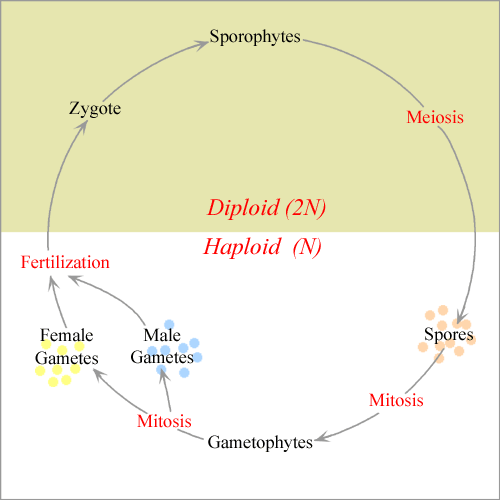
Diplo-haplontic Life Cycle
Both haploid and diploid phase are true multicellular generations. Isomorphic: sporophyte and gametophyte generations are morphologically alike. Heteromorphic: sporophyte and gametophyte generations are morphologically distinguishable. Examples: most plants |
 |
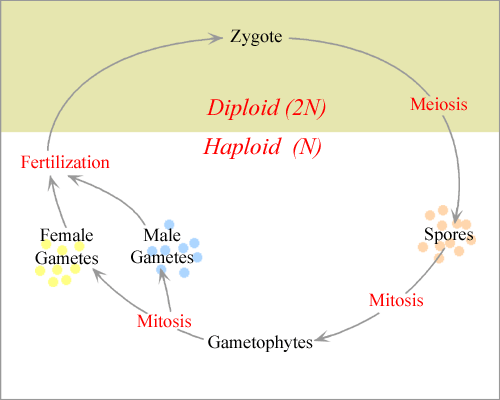
Haplontic Life Cycle
Haploid phase is the only true generation: no sporophyte generation exists; after fertilization zygotes directly form haploid spores by meiosis. All cells except the zygotes are haploid. Examples: many algae and fungi |
 |
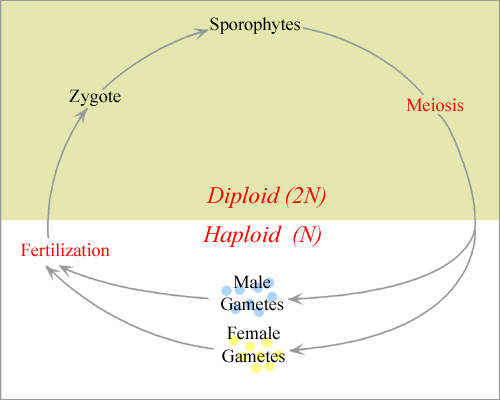
Diplontic Life Cycle
Diploid phase is the only true generation: no gametophyte generation exists; gametes form directly from meiosis of diploid cells. All cells except gametes are diploid. Examples: some green algae, most animals (including humans) |
 |
Back to Plant Lab mainpage |
Back to Conservatory |