Huntington>Conservatory>Plant Lab>Stems

Stem


The two main functions of a stem are structural support and nutrient conduction. It needs to support and elevate leaves for maximal light reception. It needs to transfer water, minerals and nutrients between the roots and leaves. Stems can also function as food storage organs.


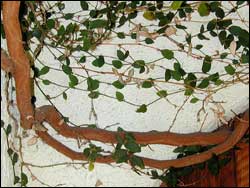
Climbing stem
These stems can climb up a support.


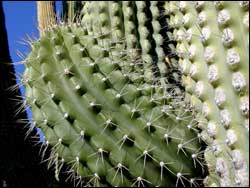
Succulent stem
These stems are adapted for water storage and photosynthesis.

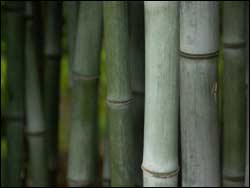
Cane
Woody stems with nodes


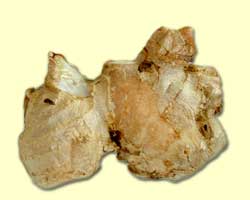
Rhizome (Rootstock)
An underground horizontal stem that can send out both shoots and roots.


ginger
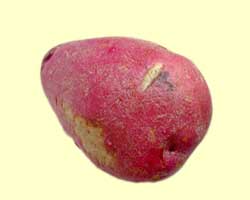
Tuber
A thickened rhizome with nutrient reserves, usually underground.


potato
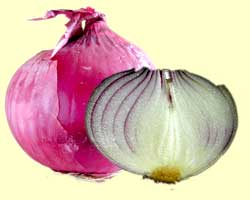
Bulb
A large bud with a very short stem that is surrounded by many fleshy leaves.


onion

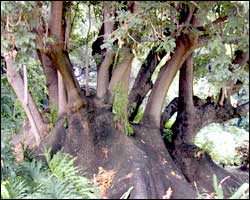
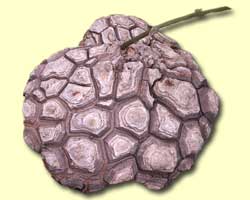
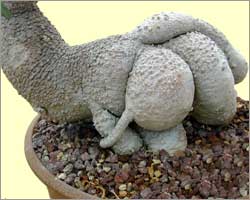
Caudex: An enlarged woody base of a stem, used for water storage in harsh environments.
Examples: Caudiciform succulents, some palms and cycads.

Ombu tree in Jungle garden

Dioscorea macrostachya
(Tortoise plant)

Fockea crispa


More different stems

Back to Plant Lab mainpage

Back to Conservatory


Copyright for the photos on this website belongs to Pu Chen. Images should not be redistributed without the permission of the photographer.