|
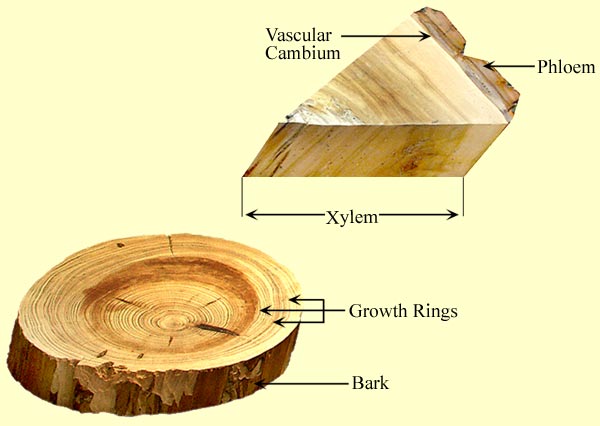
Phloem:(bark) |
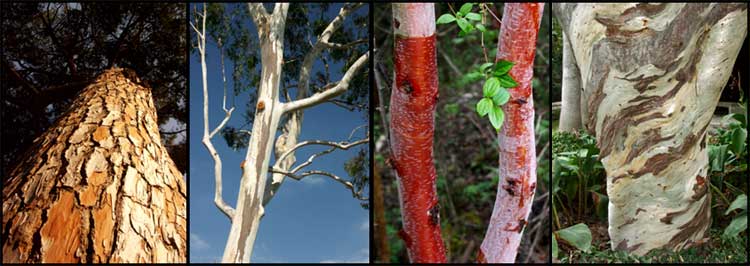
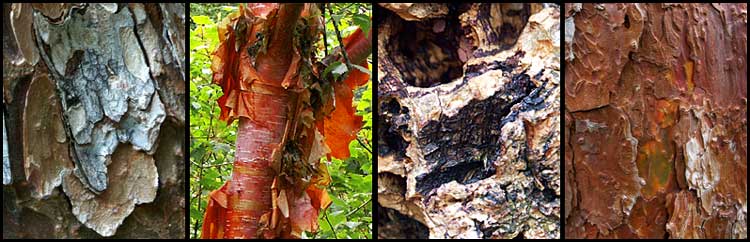
Outer bark
(dead cells) |
protection from physical damage and water loss. |
Inner bark
(living cells) |
the conductive tissue that carries photosynthesis products (mainly glucose and starch)
from the leaves to other parts of the tree. |
| |
one-cell-thick growing layer; the lateral meristem
that is responsible for secondary growth in gymnosperms and most
dicots. It produces phloem cells outward and xylem cells inward. |
Xylem: (wood) |
Sapwood
(living cells) |
the conductive tissue that carries water and minerals from roots to leaves. Relatively thin,
youngest and outermost part of xylem. |
Heartwood
(dead cells) |
the nonconducting dense core that is the main supportive structure of a tree trunk. Not all woody plants
have heartwood. |
Growth rings:
Exhibit |
Trees in temperate zones grow only during part of the year, producing seasonal growth rings. Each ring represents one year's growth, so you
can tell the age of a tree by counting its rings. In tropical rain forests, however, trees grow year-round
so it is harder to determine their age. |