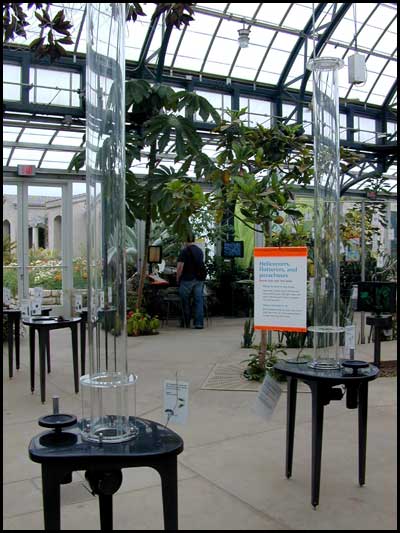
| Parachutes: these seeds or single-seeded fruits
(achenes) are attached to umbrella-like
hair clusters at the top. The lightweight seeds can be dispersed by wind over long distances. |
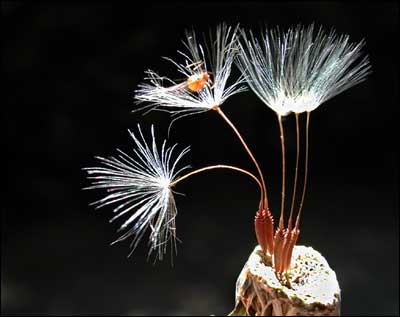
Each individual dandelion seed is attached to a parachute.
(Taraxacum officinale, Asteraceae) |
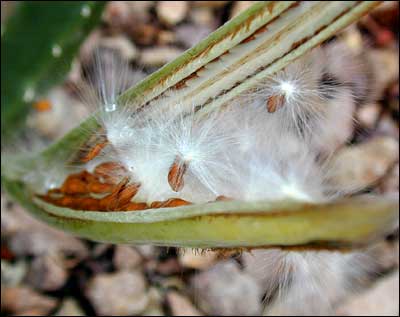
The seed pod of a starfish flower.
(Stapelia, Apocynaceae) |
| Helicoptors: these seeds have a rigid wing on one side. |
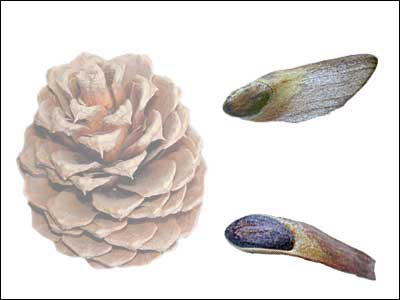
The winged seeds (enlarged) from a pine cone.
(Pine, Pinaceae) |
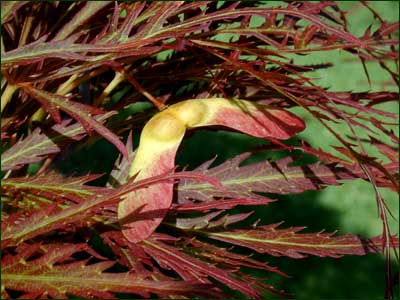
Two winged seeds of a Japanese
maple are joined at the base.
(Acer palmatum, Aceraceae) |
| Flutterers: these seeds have papery wings on two sides or surrounding them. |
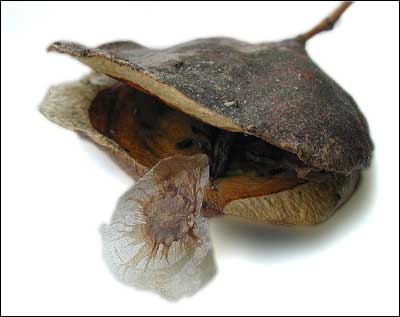
A leathery seed pod with a winged seeds showing.
(Jacaranda, Bignoniaceae) |
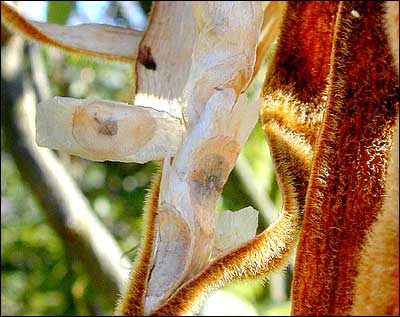
Seeds of the Golden
Trumpet Tree
(Tabebuia chrysotricha, Bignoniaceae) |
| Cotton seeds: these seeds are wrapped in cottonlike hairs. |
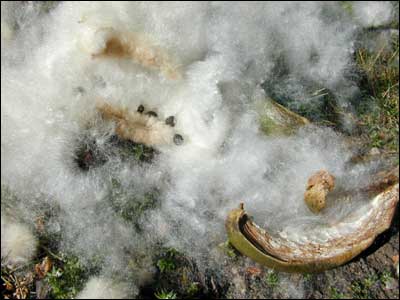
Cotton seeds from an exploded
Floss Silk Tree seed pod.
(Chorisia speciosa, Bombacaceae) |
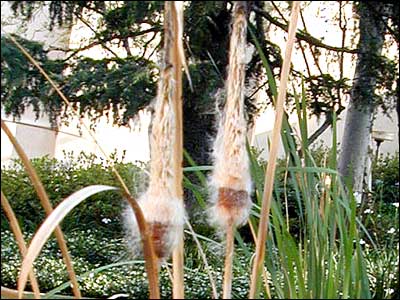
The puffy seeds of a cattail.
(Typha, Typhaceae) |