Fruits




Fruits |
|||
|
|
|
|
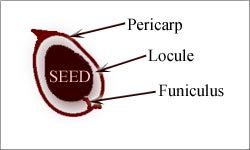 |
Dry fruits have dry pericarps when mature. They can be either indehiscent (disperse the whole fruit intact) or dehiscent (need to crack open to release their seeds). The illustration on the left shows the structure of an achene, an indehiscent dry fruit. |
| Here are some examples of dry fruits: | |
IndehiscentUsually single seed |
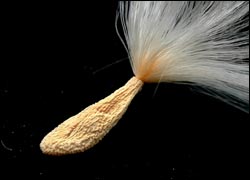 Achene of Pachypodium lamerei |
AcheneFruit from one simple pistil.A single seed in a single locule attached to pericarp only by its funiculus (stalk of the ovule); pericarp can be smooth or textured. Examples: buckwheat, dandelion. |
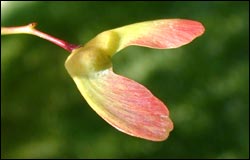 Samara of a maple (Acer) tree |
SamaraAchene with wings.Pericarp forms wing structure either on one side or surrounding the seed. Examples: ash, elm, maple. |
|
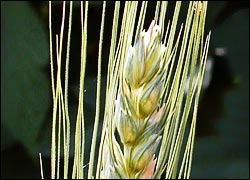 |
Caryopsis (grain)Fruit from the grass family (Poaceae or Gramineae).Similar to an achene except no locule space: seed coat is completely fused with pericarp. Examples: rice, maize, wheat, barley. |
|
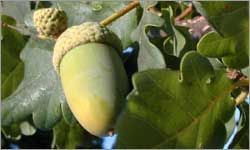 An acorn of an oak tree |
NutFruit from a compound pistil.A single seed free in the locule, attached to a woody pericarp only through its funiculus. Examples: acorn, hazelnut. |
|
DehiscentUsually many seeds |
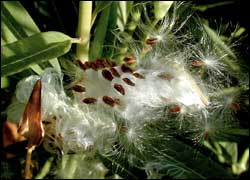 A bursting milkweed (Asclepias) follicle |
FollicleFruit from a simple pistil with many seeds.Pericarp forms a single split to release seeds. Examples: milkweed, columbine, magnolia. |
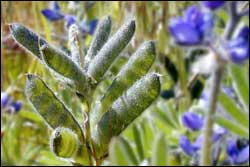 Hairy lupine (Lupinus) peapods |
LegumeFruit from the legume family (Fabaceae).Similar to a follicle except pericarp forms two splits to release seeds. Examples: bean, pea. |
|
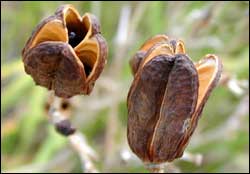 Capsules of a daylily (Hemerocallis) |
CapsuleFruit from compound pistil with two or more locules.Pericarp forms pores or multiple splits to release seeds. Examples: poppy, lily. |
Back to Plant Lab mainpage |
Back to Conservatory |