Seeds
After fertilization, ovules develop into seeds. In angiosperms, the ripened ovary becomes a fruit. Each seed is the embryo of a new plant and contains nutritional reserves for it to grow. To develop into a new plant, a matured seed needs to find a proper location for germination. This is especially important for seeds of long-lived plants. The seedlings need travel as far away from their parents as possible, in order to avoid competing with their mature parents for light and nutrients, and to reduce the chance of cross-pollination with their parents when they grow up. To achieve this goal, plants use several methods for the seeds dispersal, and adapt their physical form accordingly. The seeds can ride on wind or water, they can also be shot out by explusions (e.g. lupines, pea and bean plants), or even use fire to trigger their release (some species of pine). The most highly adapted and specialized method is dispersed by animals, either by attaching externally or by being consumed internally.Wind dispersal
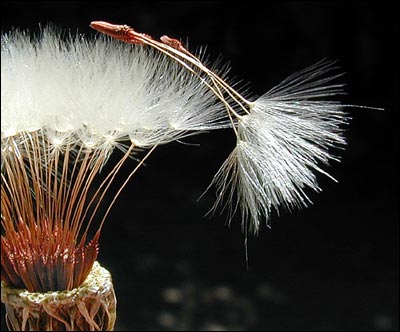
ExhibitWind can disperse seeds either over short or long distances. Since wind dispersal is a random process, seeds have only a small chance of landing on a aite favorable for germination. Plants that use wind as their dispersal method usually produce huge numbers of seeds to counterbalance this loss. Examples: dandelions, thistles (tubleweeds).
Water dispersal
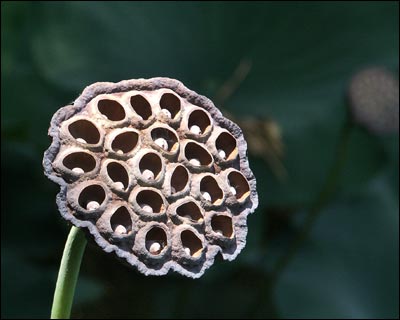
Seeds can be carried away by moving water, like the lotus seeds in this picture. Coconuts and fruits from mangrove trees can also be dispersed by ocean currents.
Animal dispersal I:
Externally
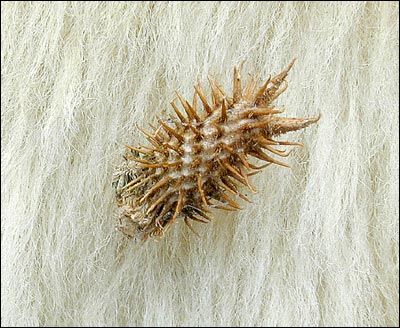
ExhibitSeeds can attach to fur, feathers, or clothing to be carried away from the parent plant. These seeds develop attachment aids, such as small hooks.
Animal dispersal II:
Internally
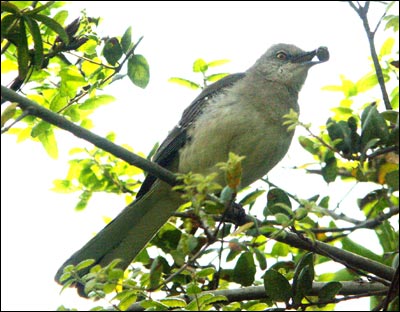
ExhibitSeeds that develop inside tasty fleshy fruits can be carried away by animals that eat the fruits.
Animal dispersal III:
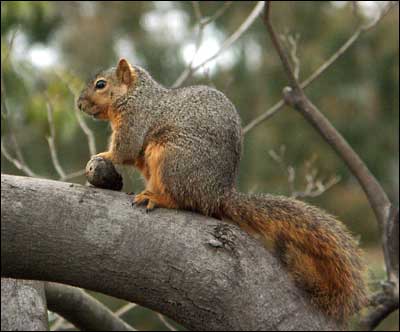
Seeds can be dispersed by animals who collect them but do not eat them. These are usually edible seeds enclosed in tough outer casings that make them difficult to access. Squirrels bury the nuts they cannot eat right away, then may either forget them or abandon them for easier foods.