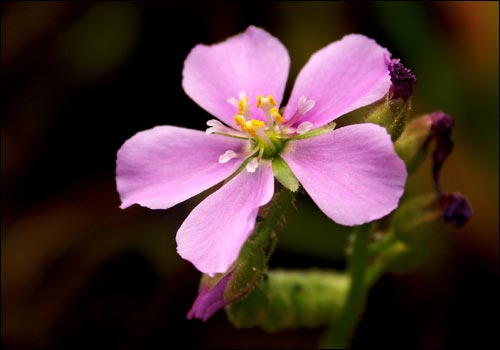
There are over 170 species of Sundews in the genus Drosera ("drosos" means "dew" in Greek),
which is one of the largest genera of carnivorous plants. Sundews can be found growing
everywhere except Antarctica, but most species are found in Australia. Their name comes from the dew-like
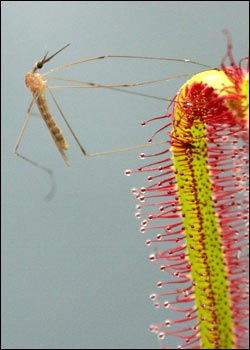
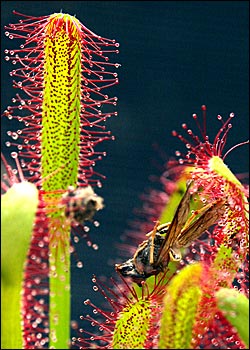
mucilage on their leaves, which glitters in the sun. This mucilage are used by sundews and other flypaper traps
(or adhesive traps) to catch their prey. Sundews have not only only been planted as ornamental plants,
they have also been used as medicinal herbs for hundreds of years. They are still used today in many medications, especially
ones that treat respiratory diseases such as asthma and coughs. |
|
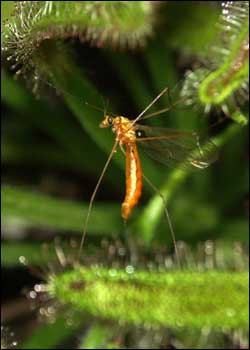
Trapping system: An individual sundew plant usually traps small insects.
However, sundews tend to grow together in their natural habitat. They can catch bigger prey such as butterflies and dragonflies
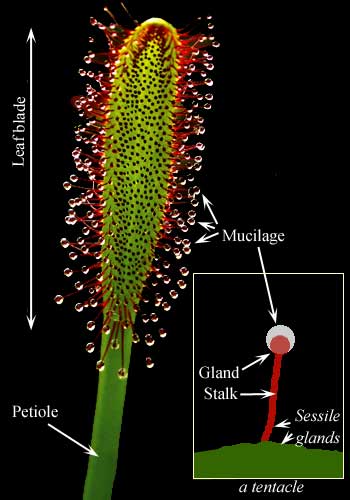
by their collaborated efforts. Sundews usually trap their prey with two specialized glands: |
| Stalked glands: (tentacles) the peduncular glands that produce sweet sticky mucilage
to attract and entrap insects. They also secrete digestive enzymes to digest the prey. |
Sessile glands: the stalkless glands that absorb nutrients from the digested preys.
Some species do not have these glands.
|
All sundews can move their tentacles to bring more of them into contact with the prey.
Some species can also bend their leaf blades.
|