Flowers
Flowers are a group of highly specialized structures used in the sexual reproduction of angiosperms. Every aspect of a flower (appearance, scent, pollen, nectar, etc.) is adapted for efficient pollination to produce seeds.




FlowersFlowers are a group of highly specialized structures used in the sexual reproduction of angiosperms. Every aspect of a flower (appearance, scent, pollen, nectar, etc.) is adapted for efficient pollination to produce seeds. |
|||
|
|
|
|
| An inflorescence is a cluster of two or more flowers on the branch of a flowering plant. According to the sequence of flower maturation on the branch, there are two basic types of inflorescence: cymose or racemose. |
Cymose
Main stem terminates with the first-blooming flower, no further apical elongation. |
Dichasium CymeA balanced cymose. |
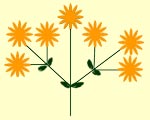 |
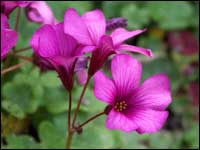 |
Scorpioid CymeAn unbalanced cymose. Usually sessile. |
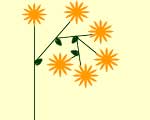 |
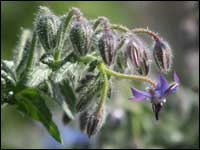 |
Racemose
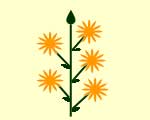
Main stem terminates with an apical bud, can keep on growing. |
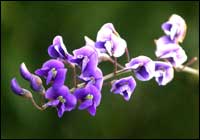
RacemeUnbranched, single main stem terminated by an apical bud. |
 |
 |
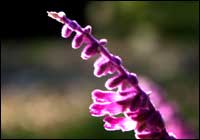
SpikeA type of raceme with sessile flowers.Two special forms: spadix and catkin. |
 |
 |
|
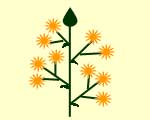
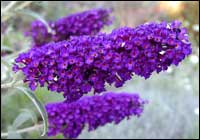
Panicle(compound raceme)A highly branced racemose. |
 |
 |
|
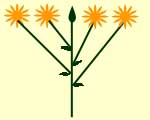
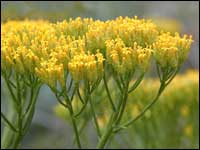
CorymbSimilar to a panicle, but flat-topped so that it superfacially resembles an umbel. |
 |
 |
|
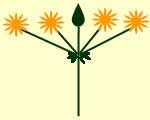
Simple Umbel |
 |
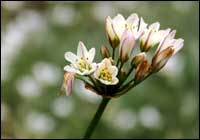 |
|
Compound UmbelCommon in the carrot family (Umbelliferae or Apiaceae). |
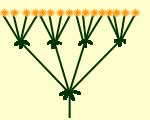 |
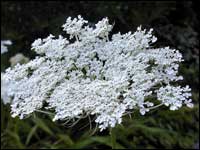 |
|
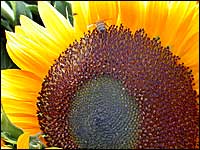
Head (Capitulum)Sessile flowers tightly clustered on a concave or convex common receptacle. |
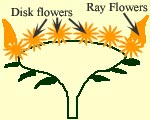 |
 |
Back to Plant Lab mainpage |
Back to Conservatory |