Flowers
Flowers are a group of highly specialized structures used in the sexual reproduction of angiosperms. Every aspect of a flower (appearance, scent, pollen, nectar, etc.) is adapted for efficient pollination to produce seeds.

FlowersFlowers are a group of highly specialized structures used in the sexual reproduction of angiosperms. Every aspect of a flower (appearance, scent, pollen, nectar, etc.) is adapted for efficient pollination to produce seeds. |
|||
|
|
|
|
| Wind: Random, inefficient. Inconspicuous flowers, tend to have multiple inflorescences. Copious amounts of pollen. | ||
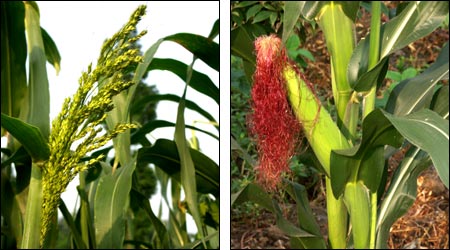 Maize is a wind-pollinated monoecious flowering plant. LEFT: male flowers in cluster (tassles) on top of the plant; RIGHT: female flowers with long stigmas (silk) at the lower part of the plant. |
Wind-pollinated flowersReduced or absent perianth;well exserted (protruding) stamen and style; long and narrow filaments; abundant small dry pollen; large number of female flowers; large stigmas, usually branched or feathery; ovary with single ovule. Examples: many grasses, maize, willow, oak. |
|
| Animal Vectors: Need attractions and "bribes" (i.e. food). Flowers need to be conspicuous in form, color and fragrance in order to advertise to their specific pollinators. | ||
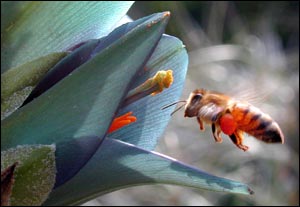 A bee visits a puya flower. |
BeesThe most important pollinator.Attracted by sight and smell; perceive ultraviolet but not red; short tongue; need to land to feed; high energy demand. |
Bee flowersUsually irregular in shape;bright colors, usually blue or yellow; moderate amounts of nectar; have nectar guides; sweet fragrance; shallow or broad entrance; stigma usually protrudes beyond stamens; landing platform formed by corolla. Examples: Orchid, pea, pitcher plant. |
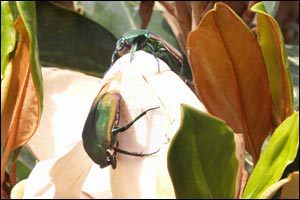 Magnolias are pollinated by beetles. |
BeetlesPoor fliers;poor vision; good sense of smell; feed on pollen and other floral parts. |
Beetle flowersLarge single flower or inflorescence;not much visual attraction, pale-colored perianth (white or pastel); pungent fruity smells; many floral parts, especially stamens and pistils; inferior ovaries. Examples: Amorphophallus, magnolia, water lily. |
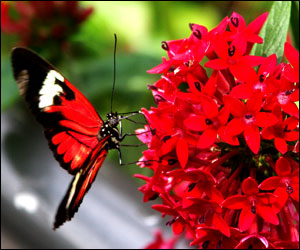
A butterfly is feeding with its long proboscis. |
Butterflies(and diurnal moths)Attracted by sight and smell; some species can see red; need to land to feed; have long and narrow tongue (proboscis); nectar as major food source; high energy demand. |
Butterfly flowersBright colors, some red (including pure red) and orange;landing platform formed by corolla or clusters of flowers; long, narrow tubular corolla, or open tubular corolla with nectar spur; nectar at the base of tube or spur; abundant nectar with nectar guides; large and sticky pollen; stigma well protruding. Examples: many composite flowers, milkweed. |
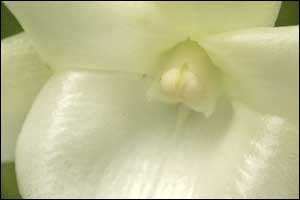 Angraecum sesquipedale is pollinated by the giant hawk moth. |
Moths(nocturnal)Active at night; good sense of smell; hover well. Butterflies or moths? |
Moth flowersMay open only at night;white to cream colors; strong, sweet fragrance after sunset; large and sticky pollen; stigma well protruding. Examples: Darwin's orchid (Angraecum sesquipedale), banana, mango. |
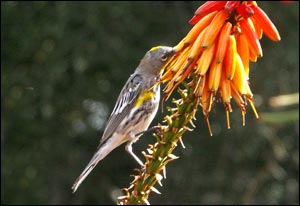 A bird visits a Kniphofia (torch lily) flower. |
BirdsPoor sense of smell;feed on nectar, floral parts and insects in flowers. |
Bird flowersVery colorful, usually red and yellow;large single flower or large inflorescenes; little or no fragrance; copious, watery nectar with nectar guides. Examples: passion flower, fuchsia, hibiscus, some columbines. |
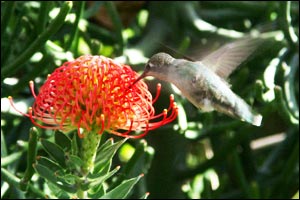 A hummingbird visits a Protea. |
HummingbirdsThe major bird pollinators in North and South America.Perceive red and yellow well; good at hovering; long bill; high energy demand. |
Hummingbird flowersUsually red and yellow;large and tubular; horizontal or hanging, without landing platform; no fragrance; rich in nectar at the tube base or nectar spur; nectar guides; stamens well protruding; stigma even further protruding; inferior ovary. Examples: Fuchsia, hibiscus, some columbines. |
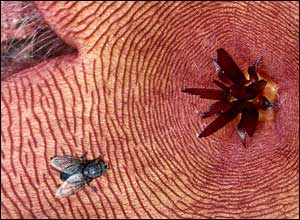
Stapelia (starfish) flowers attract flies. |
FliesAs important a pollinator as bees in certain conditions.Feed on nectar; do not gather pollen. |
Fly flowersSome beetles like sweet fragrance and nectar reward:flowers have accessible nectar, usually with nectar guides; well exposed stamens and pistils. Others like putrid ordor: rotten-meat smell; flowers usually have "traps" to prevent flies from leaving too soon (bristles, patterns, particular flower shapes). Examples: Amorphophallus, some orchids, stepelia, euphobia. |
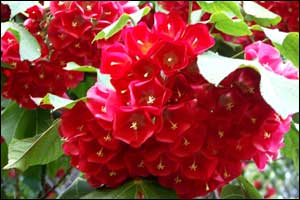 Strawbery snowballs, Dombeya cacuminum, are pollinated by bats. |
BatsNocturnal;attracted by smell |
Bat flowersMostly dull-colored and open at night;strong fruity or musty smells; large single flower or large inflorescenes; copious, watery nectar with nectar guides. Examples: Osa pulchra, Sausage Tree (Kigelia africana). |
Back to Plant Lab mainpage |
Back to Conservatory |