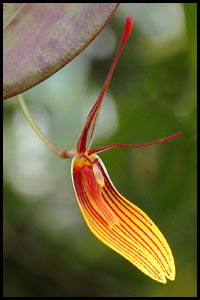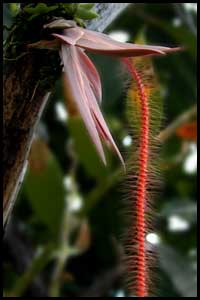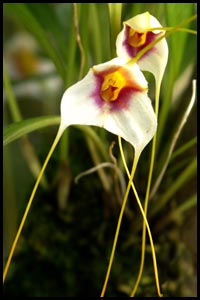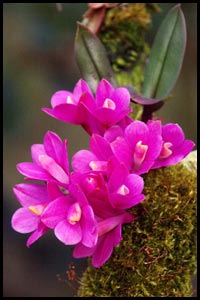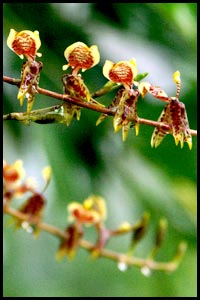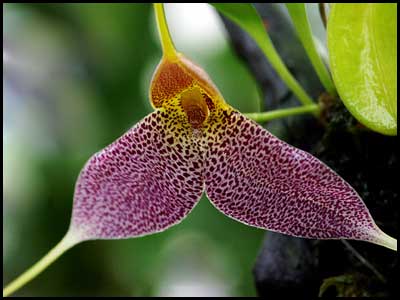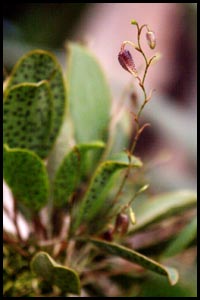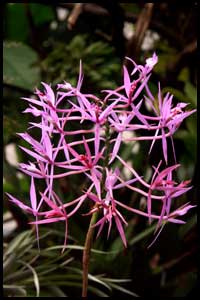
Illustration of two orchids |
Orchid flowers |
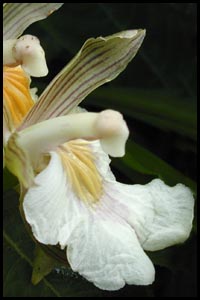
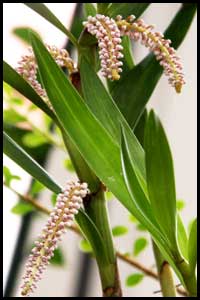
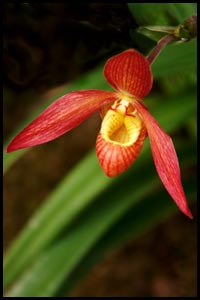
| Orchid flowers are among the most advanced and intricate flowers in the plant kingdom. The basic theme
of an orchid flower is an irregular (zygomorphic) flower with three sepals
and three petals. Sizes and shapes vary greatly among
different genera. Orchid flowers have evolved intricate phenotypes to attract their
pollinators (mostly different types of insects).
The highly developed interior of the orchid flower keeps the pollinators on a specific route that maximizes the benefit of each visit.
|
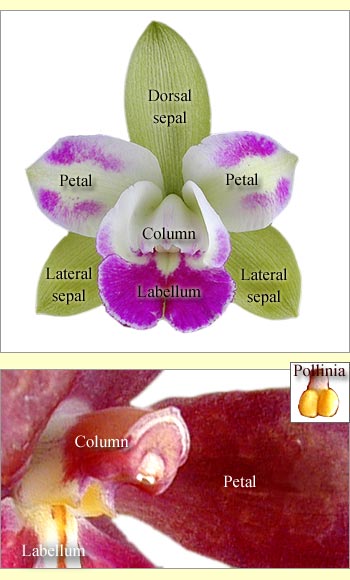
| Sepals: usually colorful and similar to petals. In some genera (such as Masdevallia),
sepals are the showiest part of the flower. |
| Petals: two lateral petals and a labellum. |
| Labellum (lip): a modified petal, usually the most colorful part of the flower. It provides a landing
platform for pollinators. |
The unique sexual structure of orchid:
Column: a combined structure of stamen and
pistil. Inside a column, the stamen and pistil are
separated by a rostellum to prevent self-pollination. |
| Stamen: pollen is packed into a clump
called a pollinium that is dispersed as a unit. Usually have two or more pollinia. |
| Pistil: with fused carpels and inferior ovary.
Each ovary contains many tiny ovules and generates dustlike seeds. |