Bog
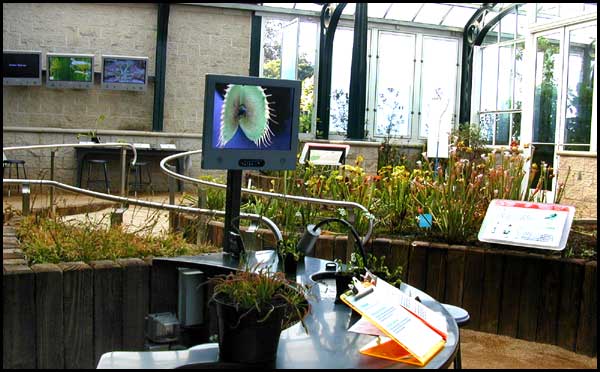
Bog |
|
| A bog is a very unique type of wetland. It is a stagnant body of water covered by a spongy floor formed by sphagnum moss and peat deposits. Bogs get their water mainly from preciptation and have very poor drainage. Bog water is usually very acidic, cold and low in nutrients. Bogs have great ecological importance. They can absorb rainwater to prevent flooding in downstream areas. The carbon-storing capacity of the peat deposit is important for regulating the global climate. They also provide habitats for many unique plants (such as carnivorous plants) and animals that are adapted to their harsh environments. Bogs can be found from Arctic Norway to Chile and Peru. | |
|
|
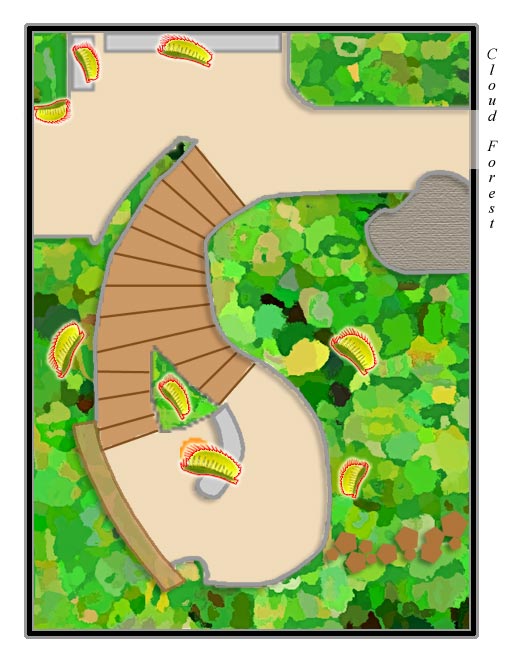
Click on the flytraps to see more of the bog displays:
|
More about carnivorous plants: |
 Butterworts |
|
 Pitcher plants |
|
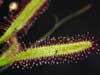 Sundews |
|
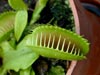 Venus flytraps |
Carnivorous plants are also called insectivorous plants.
These plants usually live in places where the soil is poor in nutrients. They have adapted
to their environment by changing their diet: they get some or most of their nutrients (especially nitrogen and phosphorous) from animals,
primarily insects and other arthropods. All carnivorous plants develop modified leaves
as their digestive organs. To catch their prey, different carnivorous plants use different trapping mechanisms.
Here are examples of different traps:
|
|||||||||||||
Cloud Forest |
Tropical Forest |
Plant Lab |
Back to Conservatory |